
Best Probiotic Foods for Anxiety and Mental Clarity
Have you ever had “butterflies” in your stomach with nervousness? Maybe a “gut feeling” about a decision? It’s not just a poetic expression—it’s biological fact.
It has been confirmed that your Second Brain is your gut. The gut and mental state connection referred to as Gut-Brain Axis is a key to dealing with a clouded mind and relieving stress and anxiety.
In this guide, we go deep inside the world of Psychobiotics: a class of probiotics designed for targeting psychological health.
a. The Science: How Your Gut Controls Your Mood
Most of us believe Serotonin, also referred to as the “happiness chemical,” is produced in our brain. Almost 90% of our serotonin is actually produced in our intestines.
The Vagus Nerve: The “Information Super Highway” The brain “talks” to our gut through the Vagus Nerve. When our “gut flora” is out of balance, our brain gets “distress signals,” which trigger anxiety, grumpiness, and “brain fog.” When we eat particular probiotics, we are actually “telling” our brain “everything is okay.”
When good bacteria feed on fiber, they release Short-Chain Fatty Acids (SCFAs) in the form of Butyrate. Butyrate works by making the blood-brain barrier stronger and fighting off neuroinflammations that are a chief reason for individuals feeling less focused.
Top 5 Probiotic Foods for Mental Health
We are focusing on the strains of the bacteria that are found in such foods.
1. Kefir: – The King of Bacterial Diversity
Contrary to yogurt, which normally contains 2-3 bacterial strains, Kefir combines up to 61 bacterial and yeast strains.
There have been observations made in scientific study that Lactobacillus kefiri can aid in decreasing the secretion of Cortisol, It is high in the amino acid tryptophan, which is a precursor of serotonin.
2. Raw Sauerkraut: The GABA Producer
The cabbage fermented in its own juices is a powerhouse of Lactobacillus plantarum.
This particular strain is associated with the release of GABA (Gamma-Aminobuyric Acid), which is the “inhibitory” neurotransmitter that “quiets” the “anxious, racing thoughts
Note: only raw or unpasteurized sauerkraut will do, since heat will damage the live cultures
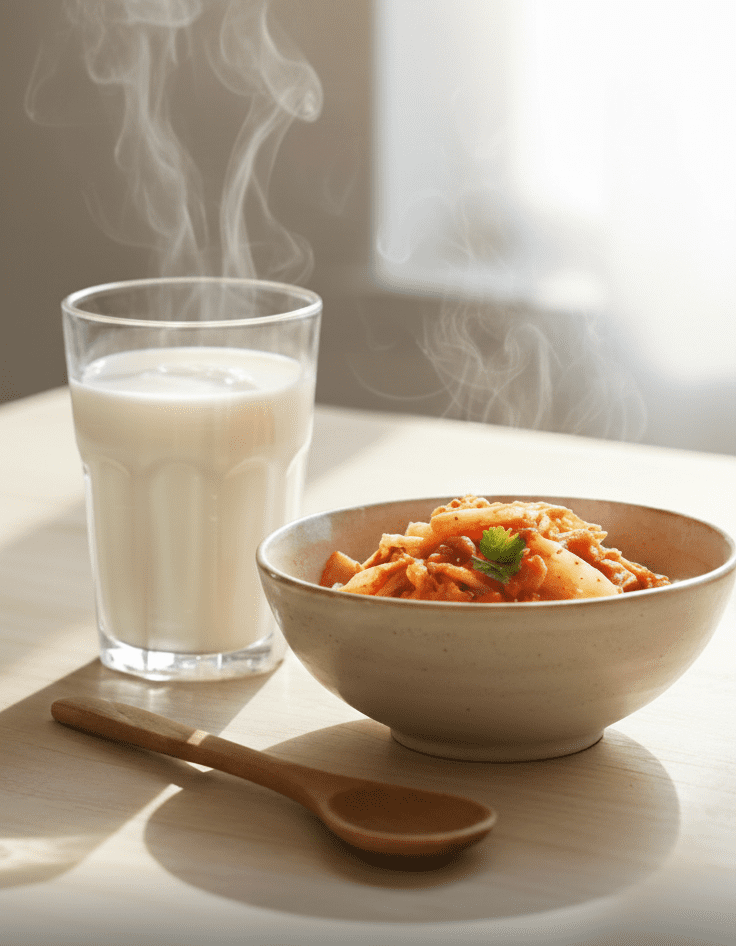
3. Kimchi: The Inflammation Fighter
It is rich in the bacteria Lactobacillus brevis. Kimchi has been proven to lower inflammation in the body. Because “brain fog” is known to result in systemic inflammation of low grade, kimchi is an elite food for mental clarity.
4. Traditional Miso: The Cognitive Booster
Miso is produced using fermented soybeans; Aspergillus oryza. Some research in Japan has found that regularly consuming fermented soy products has been shown to enhance memory, as well as serve as a protective factor against declining mental abilities in the elderly.
5. Greek Yogurt: The Cortisol Regulator
Notice the packaging that displays the label “Live and Active Cultures.” A study published in the journal Gastroenterology discovered that women who consumed two servings of yogurt a day for a period of four weeks demonstrated a reduced response to negative emotions and stressful conditions.
b. The "Prebiotic" Secret: How to Make Probiotics Work
A common mistake is eating probiotics without Prebiotics. Think of probiotics as "seeds" and prebiotics as the "fertilizer." To ensure these bacteria survive in your gut to help your brain,
You must eat:
Inulin-rich foods: Onions, garlic, and leeks.
Resistant Starches: Slightly green bananas and oats.
Polyphenols: Dark cocoa and blueberries (which also boost BDNF, a protein that grows new brain cells).
c. How to Implement the “Clear Mind” Diet
To avoid digestive upset (which can cause temporary anxiety), follow this protocol:
1. Start Slow: Begin with just 1 tablespoon of fermented foods per day.
2. Rotate Your Strains: Don’t just eat yogurt. Swap between Kefir, Kimchi, and Miso to ensure a diverse “microbial pharmacy” in your gut.
3. Hydrate: Probiotics work best in a well-hydrated environment.
d. The "Anti-Brain" Foods: What to Avoid for Mental Clarity
If you are taking probiotics but are also eating “gut wreckers,” you are taking two steps forward but three steps backward. If you desire to heal your gut-brain axis, you must avoid these four categories of foods:
1. Ultra-Processed Sugar: Sugar fuels the growth of “bad” bacteria (Candida), reducing the success of your psychobiotics. “Sugar Crashes,” now simulating an “anxiety attack,” include shaking, sweating, and palpitations.
2. Artificial Sweeteners (Aspartame & Sacchar): Ironically, some of the “diet” beverages that can damage your mental health are found in “healthier” drinks. According to studies found in the journal Nature, some artificial sweeteners affect your gut bacteria in such a way that your glucose intolerance and mood will be affected adversely.
3. Excessive Alcohol Alcohol is a “gut-stripper.” Alcohol is irritating the intestinal lining, creating a “leaky gut.” A compromised intestinal lining means that toxins will get into the bloodstream and trigger a neuro-inflammatory response that creates the dreaded “hangxiety” (post-alcohol anxiety).
4. Emulsifiers in Processed Foods Typically found in “healthful” protein bars and dairy-free milks (such as Polysorbate 80/Carboxymethylcellulose), these substances have the capacity to degrade the protective mucus coat of the intestines, resulting in inflammation of the brain fog that we seek to prevent.
e. Precautions & Best Practices for Psychobiotic Healing
Healing your mind through your stomach is a marathon, not a sprint. Follow these safety guidelines to ensure the best results.
A. The “Die-Off” Effect (Herxheimer Reaction)
When you begin to consume high-quality probiotics such as Kefir or Kimchi, you may experience feelings of poorer health for 2 to 3 days. This phenomenon is described as the “die-off” reaction. As harmful bacteria die off, it secretes toxins.
Symptom: Mild bloating, headache, or a slight rise in irritability.
The Fix: Don’t stop! Just cut back the dosage and stay hydrated with lots of water. This means your probiotics are working.
B. Histamine Intolerance ;
Although many people are sensitive to histamine, which is high in aged cheese and sauerkraut,
The Warning: If your body reacts to fermented foods with hives, an accelerated pulse, or a stuffy nose, you may have a histamine intolerance. Then, your diet should emphasize fiber (prebiotics) instead of fermented foods to help your body grow its natural colonies of beneficial bacteria.
Many “probiotic” yogurts sold in stores are high in sugar and are also “pastuerized,” or heat-treated after the fermentation process to kill the bacteria.
Tip: Look for the ‘Live & Active Cultures’ mark or purchase from the refrigerated section, not the shelf-stable section.
f. Frequently Asked Questions (FAQ)
Q1. When can one feel the difference for anxiety?
Ans ; It takes about 4 to 8 weeks to witness noticeable improvements for mood changes according to most clinical trials conducted on the relationship between the gut and brain.
Ans ; While supplements are convenient, fermented foods like Kefir provide a “matrix” of nutrients, enzymes, and a wider variety of bacterial strains that pills often lack.