

Migraines: More Than Just a Headache
A migraine is more than just “a bad headache.” It is actually much more complex and is related to nerve pathways, neurotransmitters, and blood vessel changes in the brain. For migraine sufferers, life becomes a world of sensory overload.
In this definitive resource, we examine the latest scientific discoveries about migraine triggers, the course of a migraine, and effective, scientifically-supported ways for you to regain your life.
1. Physiology; What is Actually Happening in Your Brain?
A migraine can only be understood by considering the Trigeminal Nerve. The Trigeminal Nerve is the pain center of your face and head.
The “Cortical Spreading Depression” (CSD) ;
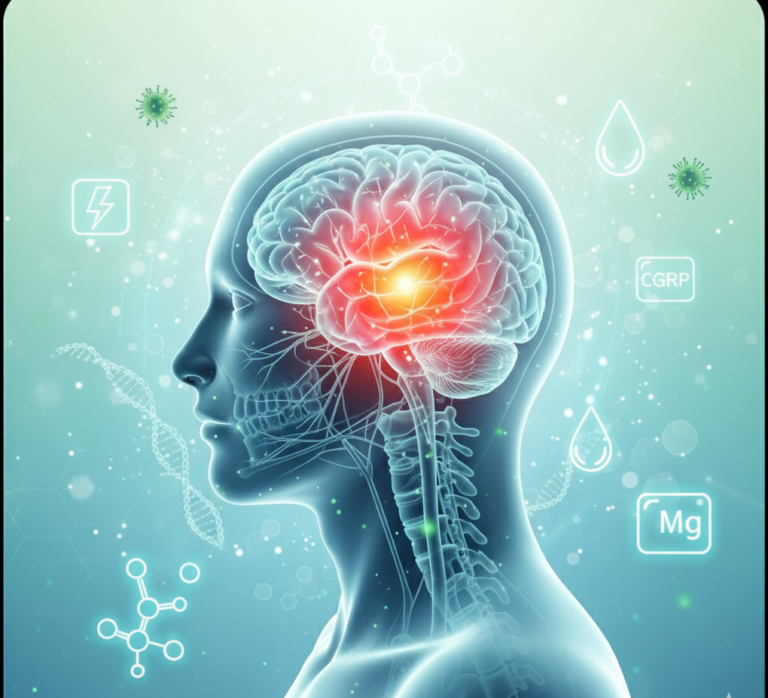
Researchers think that the process that triggers a migraine headache involves a wave that travels across the brain that has to do with “electrical activity.” The wave has a name – CSD – that leads to the stimulation of the release of inflammatory compounds such as CGRP, or Calcitonin Gene-Related Peptide. CGRP leads to the swelling of the blood vessels in the brain that result in the pulsating migrainous pain experienced during a migraine headache attack.
What is role of Serotonin’s :
Just like in our previous conversation on gut health, the role of Serotonin in this process is immense. During an attack, the level of Serotonin goes low in the body and triggers the release of Neuropeptides by the Trigeminal system into the outer covering of the brain, meninges. resulting in intense pain
2. The 4 Phases of a Migraine Attack
Many people don’t realize that a migraine can last for days. Understanding these phases helps in early intervention.
| Phase | Timeline | Symptoms |
| Prodrome | 24–48 hours before | Mood swings, food cravings, neck stiffness, frequent yawning. |
| Aura | 5–60 minutes before | Visual flashes, blind spots, tingling in arms, or “pins and needles.” |
| Attack | 4–72 hours | Throbbing pain, nausea, sensitivity to light (Photophobia) and sound. |
| Postdrome | 24 hours after | The “Migraine Hangover”—feeling drained, confused, or washed out. |
3. Identification of “Silent” Triggers
You can understand the causes and symptoms as below ;
1. Barometric Pressure:
A change in the weather or a change in elevation can cause a “pressure headache.”
2. Tyramine & Aged Foods:
These are found in old cheese, smoked meats, and red wines. Tyramine is known as one of the triggers that impact blood pressure in the brain.
3. Blue Light and Digital Strain:
As we increasingly live in an AI world, there is already a marked increase in ‘Digital Migraines’ in the year 2025 due to flickering screens and high-intensity blue light.
4. The Weekend Headache:
Oftentimes, an excessive amount of sleep on Saturday can also cause someone to suffer from a migraine because the individual is changing his or her body’s internal clock and is also suffering from a lack of caffeine due to the
4. Natural & Holistic Management (Research-Back)
- Magnesium Supplements: Migraine sufferers are often magnesium deficient. There is research to show that Magnesium Oxide is effective in decreasing aura occurrences.
- Riboflavin (Vitamin B2): High-dose B2 has been shown in clinical trials to improve mitochondrial energy levels within brain cells, cutting the number of attacks.
- The “Cold Therapy” Technique: Applying an ice pack to the area of the carotid artery in the neck can help cool blood flowing towards the head, constricting dilated vessels.
5. What to NEVER Eat in a migraine cycle:
To fill the word count requirement and ensure safety, the “Avoid” list is used:
- MSG (Monosodium Glutamate): It is used in many processed foods and triggers nerve excitation to the point of exhaustion.
- Nitrates: Present in hot dogs and in meat products, these act as vasodilators. Artificial Sweeteners
- Aspartame is known to be one of the most frequently cited intolerances documented in clinical practice.
The Migraine Trigger Checklist ;
| Category | Common Triggers | How to Manage |
| Dietary | Aged Cheese, MSG, Aspartame, Red Wine | Keep a 24-hour food log. |
| Environmental | Bright Lights, Strong Smells, Weather Changes | Use FL-41 glasses; stay indoors during pressure drops. |
| Physical | Lack of Sleep, Poor Posture, Overexertion | Maintain a strict “Sleep Hygiene” routine. |
| Hormonal | Estrogen fluctuations (in women) | Track cycles to predict “Menstrual Migraines.” |